Benign salivary gland tumors
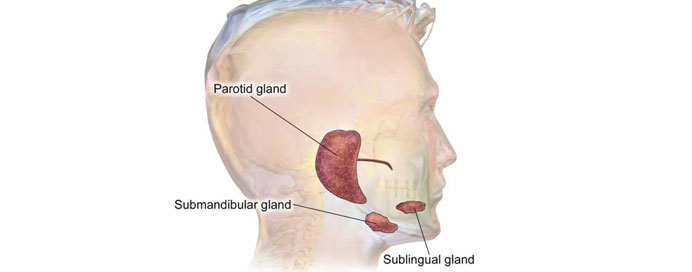
Benign salivary gland tumors are non-cancerous growths that develop in the salivary glands, most commonly in the parotid gland, followed by the submandibular and minor salivary glands. These tumors typically grow slowly and are usually painless, presenting as a firm, mobile swelling in the affected area. Although they are not malignant, early diagnosis and treatment are important to prevent complications such as enlargement, cosmetic deformity, or, in rare cases, transformation into malignant tumors. Surgical removal is the most common and effective treatment, ensuring complete excision and minimal risk of recurrence.
- Most common types include pleomorphic adenoma and Warthin’s tumor, with pleomorphic adenoma being the most frequently seen benign salivary gland tumor
- Typically present as a slow-growing, painless lump, often in front of or below the ear (parotid region), and may remain unnoticed for a long time
- Diagnosis is usually done through clinical examination, imaging (ultrasound/CT/MRI), and fine needle aspiration cytology (FNAC) to confirm the nature of the tumor
- Surgical excision (such as superficial or total parotidectomy) is the standard treatment, with careful preservation of the facial nerve to avoid complications
- Prognosis is excellent after complete removal, but long-term follow-up is recommended as some tumors may recur if not fully excised