Salivary gland cancer surgery (parotid, submandibular)
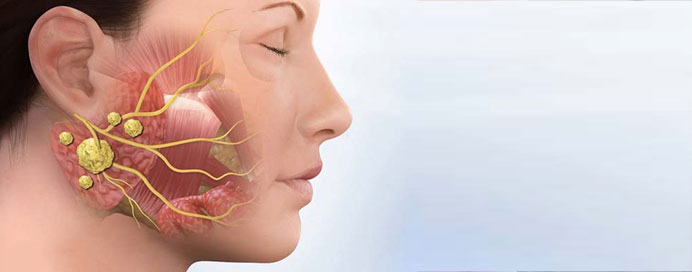
Salivary gland cancer surgery is the primary treatment for tumors arising in glands like the parotid and submandibular glands. The goal is to completely remove the tumor while preserving important structures such as nerves, especially the facial nerve in parotid surgeries. The extent of surgery depends on the size, location, and stage of the tumor. In some cases, surrounding tissues or lymph nodes may also need to be removed to prevent spread. Advanced surgical techniques and careful planning help achieve good functional and cosmetic outcomes.
Parotid Gland Surgery (Parotidectomy)
Parotidectomy involves the removal of part or all of the parotid gland, which is located near the ear. Special care is taken to preserve the facial nerve, which controls facial expressions.
- Superficial or total parotidectomy depending on tumor extent
- Facial nerve preservation is a top priority
- May require removal of nearby lymph nodes in advanced cases
Submandibular Gland Surgery (Submandibulectomy)
This procedure involves removal of the submandibular gland located beneath the jaw. It is generally less complex than parotid surgery but still requires precision due to nearby nerves.
- Complete removal of the gland is usually performed
- Important nerves (lingual, hypoglossal) are preserved
- Suitable for both benign and malignant tumors
Advanced & Reconstructive Approach
In advanced cancers, surgery may involve removal of adjacent tissues followed by reconstruction to restore appearance and function.
- May include neck dissection if cancer has spread
- Reconstruction using grafts or flaps for better recovery
- Often combined with radiotherapy for improved outcomes