Skull base tumor surgery
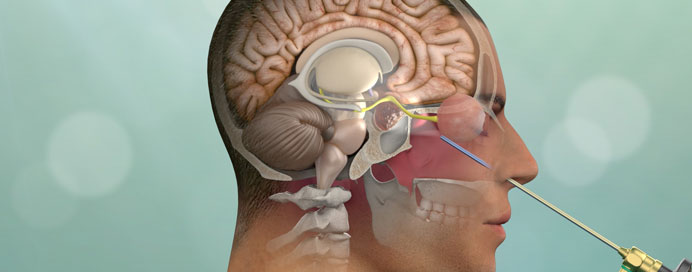
Skull base tumor surgery is a highly specialized procedure used to remove tumors located at the base of the skull, an area that separates the brain from the face, sinuses, and neck. These tumors may be benign or malignant and are often located close to critical structures such as the brain, cranial nerves, and major blood vessels. The goal of surgery is complete or maximum safe tumor removal while preserving neurological function. Modern techniques, including minimally invasive endoscopic approaches, have significantly improved precision, safety, and recovery outcomes.
Endoscopic (Minimally Invasive) Skull Base Surgery
This technique uses a nasal endoscope to access tumors through the nose without external incisions, making it less invasive.
- No visible external cuts; performed through the nasal passages
- Faster recovery and reduced hospital stay
- Less blood loss and minimal scarring
- Ideal for selected tumors of the anterior and central skull base
Open Skull Base Surgery
Open approaches involve external incisions to access deeper or more complex tumors that cannot be safely removed endoscopically.
- Provides wider exposure for large or complex tumors
- May involve temporary removal of bone for access
- Suitable for tumors involving multiple compartments
- Requires longer recovery compared to endoscopic methods
Advanced & Reconstructive Techniques
After tumor removal, reconstruction is often necessary to restore the skull base and protect the brain.
- Use of grafts or flaps to close defects and prevent fluid leakage
- Collaboration between neurosurgeons and ENT/head-neck surgeons
- May be combined with radiotherapy or chemotherapy
- Focus on preserving function (vision, speech, swallowing) and appearance